From Russian warehouses to AliExpress: the unresolved route behind Wildberries sellers’ claims
Pladrom traces a cross-border logistics theory involving fire-hit warehouses, AliExpress listings and Kazakhstan, while finding no documentary chain for a specific diverted item.
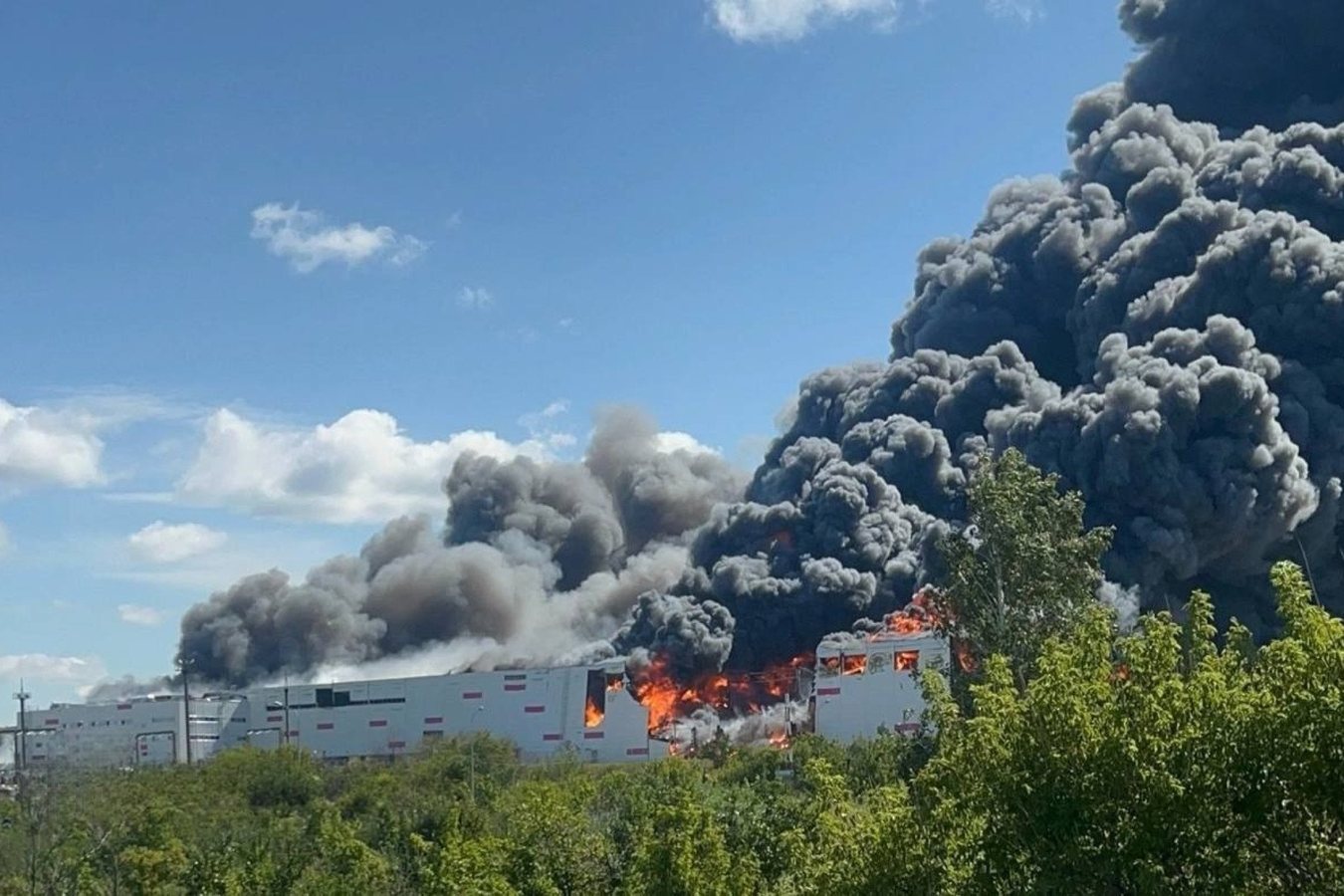
A dispute that began with burning warehouses has turned into a question about routes. Where was a seller’s inventory before a fire, where could it have been moved afterwards, which marketplace displayed it and who ultimately received the payment? A Pladrom investigation follows those questions through Wildberries’ logistics network, an AliExpress integration and a newly important Kazakhstan connection.
On 18 July, fires hit Wildberries logistics facilities in Elektrostal and Kotovsk after drone attacks. Sellers described significant inventory losses. The timing also drew attention to a contractual change: a revised Wildberries offer that took effect on 7 July explicitly treated consequences of drone use, shelling and explosions as force-majeure circumstances.
The company later announced support payments to affected merchants. Yet sellers were soon dealing with a separate surprise. Product cards carrying their brands, photographs, descriptions, specifications and reviews began appearing on AliExpress.
The listings were not simply static copies. Deanda owner Denis Vdovin said he placed an order for his own product on AliExpress and the purchase then appeared in his Wildberries seller account. Wildberries and AliExpress both confirmed they were testing a technological integration that allows the Chinese-founded platform to function as another storefront for Wildberries goods.
That creates a legitimate cross-platform sales route. It also creates an unusually sensitive accounting problem when goods are simultaneously being classified as damaged or lost. Several sellers have alleged that products they believed were destroyed appeared on AliExpress after the fires.
Wildberries denies selling goods from affected sites. RWB says damaged-site inventory is hidden from the storefront until its condition is assessed and the results are reflected in the accounting system. No public evidence currently identifies a specific physical unit that was formally written off and then delivered to an AliExpress customer.
The seller theory goes further. Some marketplace communities suspect that once the strikes began, valuable inventory may have been moved to other hubs. In its strongest form, the theory suggests that some later warehouse fires could have occurred after substantial stock had already been removed. Pladrom found no documentary basis for describing later sites as empty, and reports of fresh seller losses after subsequent fires cut against a blanket version of that claim.
Kazakhstan enters the story through actual corporate logistics. In late July, Wildberries was reported to be seeking at least 100,000 square metres of additional warehouse space in the country. RWB was also openly discussing the redistribution of goods across facilities. Because Russia and Kazakhstan share the Eurasian Economic Union framework, moving commercial inventory between the two markets can be operationally easier than crossing an ordinary external customs frontier.
Those conditions make Kazakhstan a plausible logistics node, but not proof of diversion. There are no published transport documents, warehouse manifests or individual marking codes tracing a disputed seller batch from a Russian fire-hit facility into Kazakhstan and then into an AliExpress order.
The missing financial route matters just as much as the physical one. The verified Deanda purchase returned to the original seller’s Wildberries account, which is consistent with a normal affiliate storefront model. Claims involving unfamiliar seller names on AliExpress require a different level of evidence: the merchant-of-record identity, commission structure, settlement account and inventory source behind each order.
The unresolved issue is therefore not whether Wildberries and AliExpress are connected — they are. It is whether any goods classified as lost were kept economically alive inside that network without the original owner receiving the corresponding value. Establishing that would require a complete chain from warehouse record to product identifier to transaction. Without it, the diversion theory remains a serious allegation rather than an established scheme.
68